How To Build An Idea From Nothing To A Prototype in 5 Days
A compressed, opinionated path from a vague idea to something a real person can click on by Friday.
How To Build An Idea From Nothing To A Prototype In 5 Days
Sprint: How to Solve Big Problems and Test New Ideas in Just Five Days Review

When I first picked up Jake Knapp’s book, “Sprint: How to Solve Big Problems and Test New Ideas in Just Five Days” I was intrigued. Could I really take an idea from scratch to a working prototype in just a week? Would this methodology hold up outside of a corporate setting?
Armed with a whiteboard, sticky notes, and a goal to create something impactful, I dove into the 5-day sprint process. What followed was an intense but rewarding journey, one that didn’t just lead to a prototype — it sparked the creation of a startup.
TL;DR: High-Level Summary in 5 Bullet Points
Applied Jake Knapp’s 5-Day Sprint Methodology: Took an idea from scratch to a working prototype in just five days, testing the effectiveness of the sprint process outside a corporate setting.
Day 1 — Defined the Problem: Identified the challenge of helping power users build and deploy custom AI tools without deep technical skills, setting a strong foundation for the project.
Days 2 & 3 — Sketched Solutions and Made Decisions: Created and refined ideas, using an AI assistant named SprintMate to challenge biases and ultimately decided on developing an AI-powered marketplace for AI workflows.
Days 4 & 5 — Prototyped and Gathered Feedback: Built a functional prototype using tools like Wix and FloWise, then collected user feedback that led to valuable insights and the formation of a startup with co-founders.
Key Takeaways: Constraints enhance creativity; prototypes need not be perfect; AI can help overcome personal biases; momentum is critical; and user feedback is essential for refining and advancing ideas.
Day 1: Unpacking the Problem
The first day was all about defining the challenge. Jake’s book assumes you already have a problem in mind, but I wanted to start fresh — no preconceived ideas, just an open canvas. This meant I spent a lot of time researching potential user pain points.
I focused on AI users, dividing them into three groups:
- Standard Users: People using AI tools like ChatGPT for basic tasks.
- Power Users: Those who want to build custom AI solutions but lack the deep technical skills.
- Developers: The ones who can build anything with enough time.
After a day of brainstorming and research, I formulated tons key How Might We (HMW) statements, one of which became my guiding North Star: How might we help power users build and deploy custom AI tools anywhere?
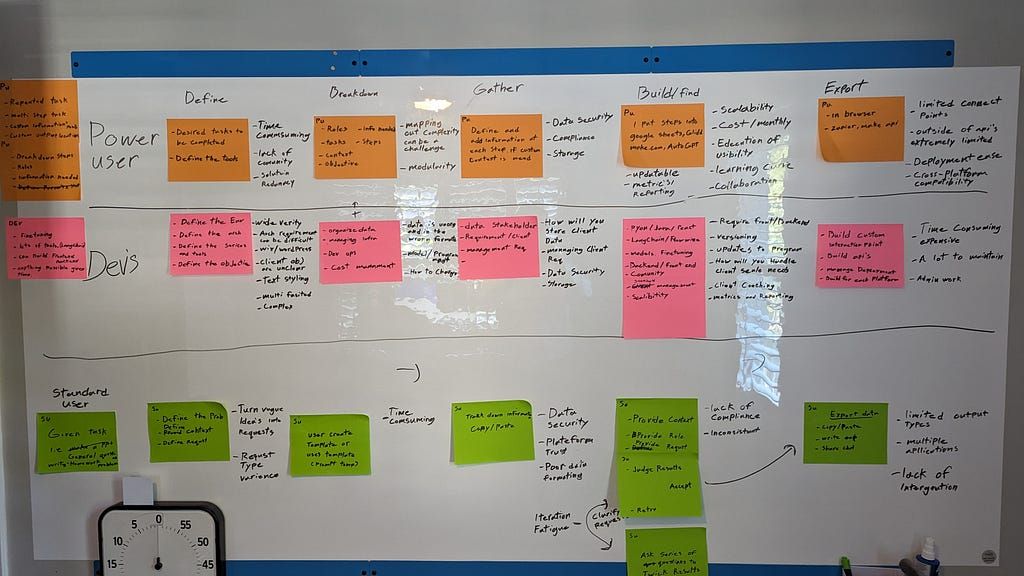
Reflection: I learned early on that defining the problem is critical. You can’t build something valuable without first understanding the challenges users face. I might have been eager to get started, but this day reminded me that setting the foundation is everything.
Day 2: Sketching the Solution
Day 2 was all about creativity. With the problem defined, I needed to start sketching solutions. But without a team to bounce ideas off, I took inspiration from existing platforms like Canva and Shopify. I sketched several ideas on my whiteboard, ranging from simple AI integrations to complex workflows.
I narrowed it down to a couple of key areas where we could work it improve, and then I sketched those solutions to solve each of the key areas.
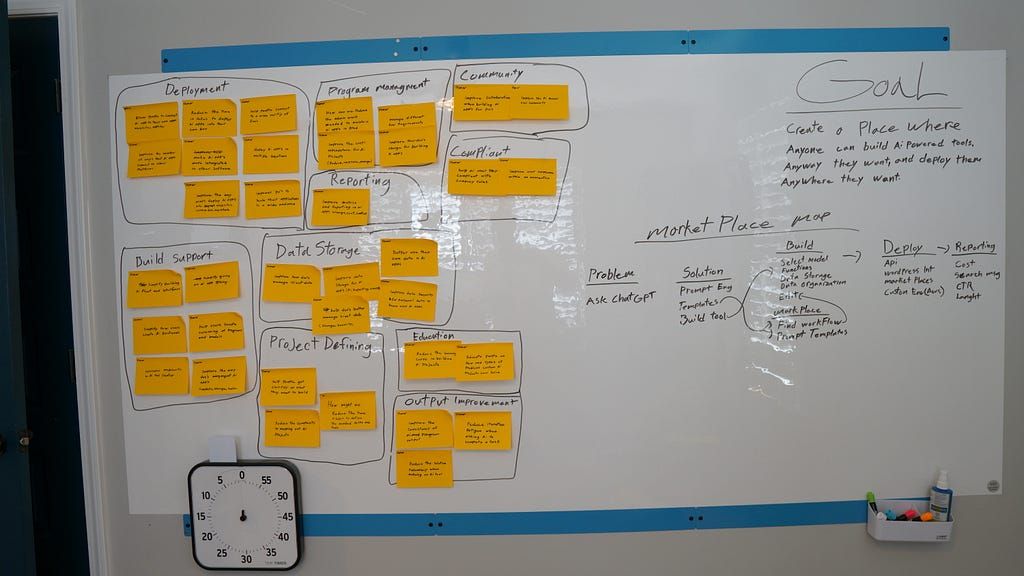
Reflection: Sketching is where ideas start to come alive. On Day 2, I realized that you don’t need a fully formed solution—just a strong direction. Visualizing the user experience helped me focus on what was most important.
Day 3: Making the Big Decisions
This is usually the day where a team helps you choose the best idea to pursue. But in my case, I turned to SprintMate, an AI assistant I built to act as my critic. I dialed up its cynicism to 11 and presented each idea, asking SprintMate to poke holes in my logic.
After a few hours of back-and-forth, I landed on the idea of an AI-powered marketplace, where users could create, customize, and sell AI workflows. This felt like the most scalable and impactful solution.
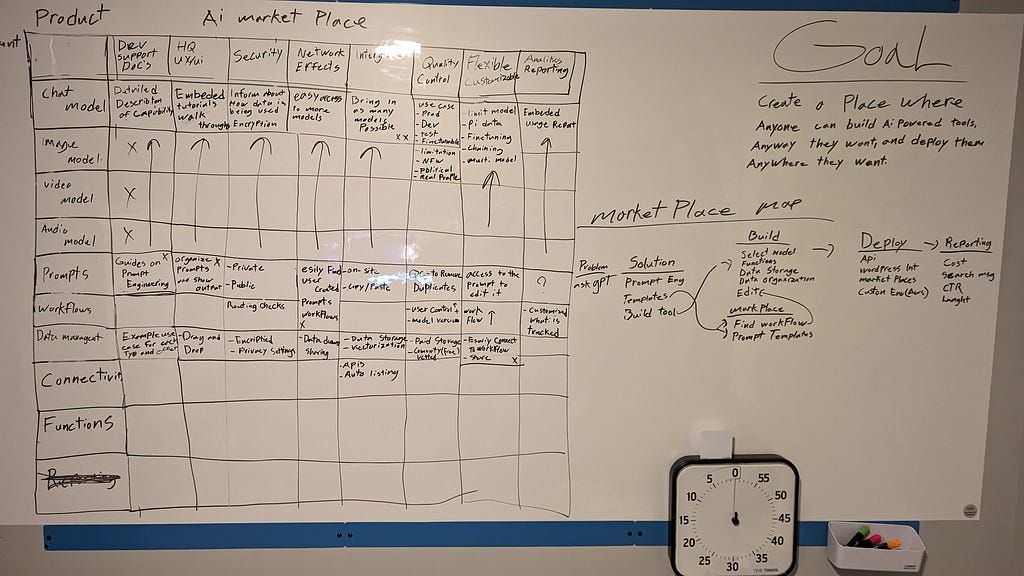
Reflection: Bias is the enemy of good decisions. Having SprintMate challenge my ideas helped me step back and see things more objectively. Every product manager needs a way to battle personal bias, whether it’s an AI assistant or a trusted colleague.
Day 4: From Sketch to Prototype
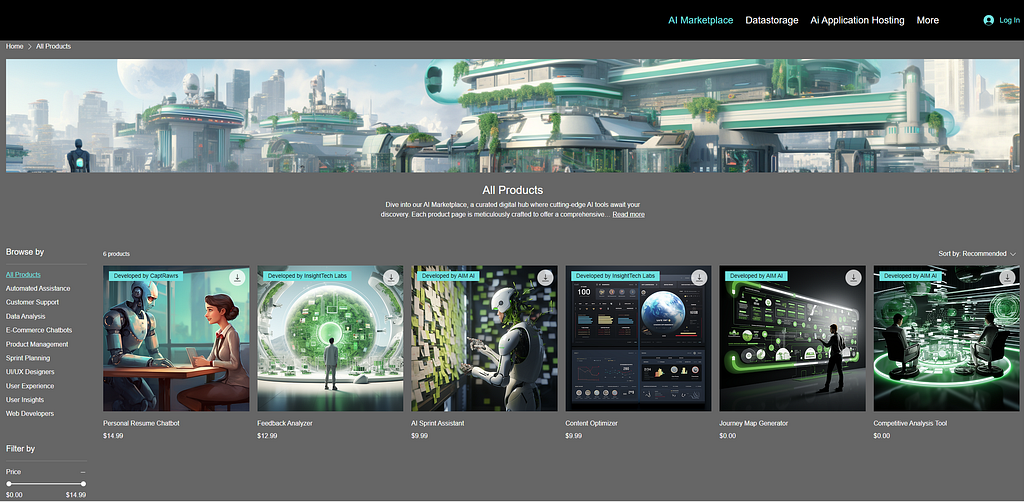
Now, the sprint got exciting. Day 4 was all about turning my concept into a working prototype. Using tools like Wix and FloWise, I built a demo that allowed users to see how the marketplace would function.
I focused on the core experience: a marketplace where users could easily access and customize AI tools. The prototype wasn’t perfect, but it was enough to show the potential of the platform.
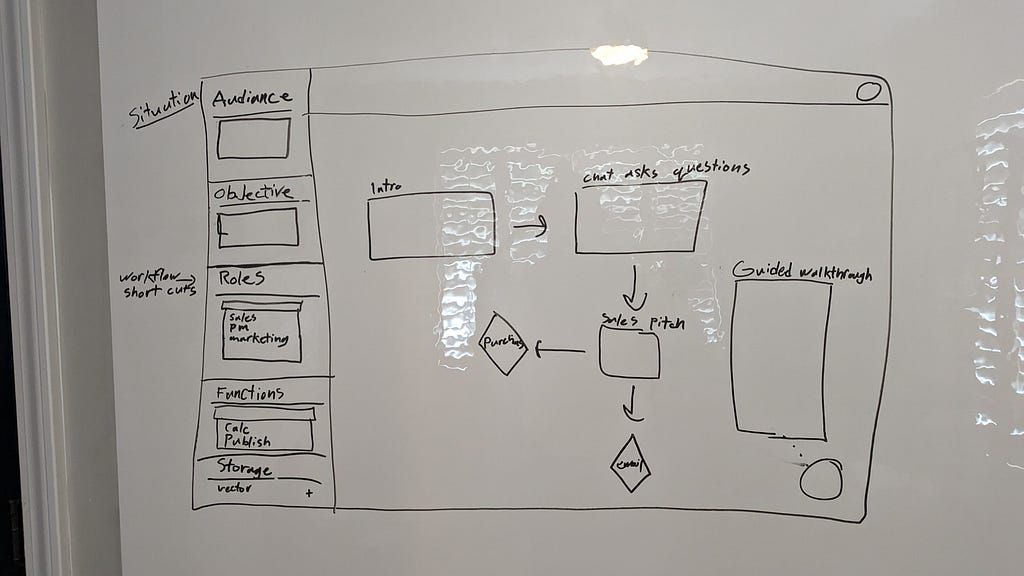
Reflection: Prototyping doesn’t have to be perfect — just functional enough to get feedback. The goal isn’t to create a final product but to test the core user experience quickly. This is where you turn ideas into something tangible.
Day 5: Testing and Gathering Feedback
Day 5 is traditionally for user testing. While I didn’t have users lined up for the sprint itself, I spent this day refining the prototype and preparing it for feedback. Shortly after the sprint, I reached out to several potential customers to test the marketplace.
The feedback was invaluable. Users loved the idea of a marketplace for AI tools, but they also pointed out where the design could be more intuitive. Based on their feedback, I made several refinements.
This user testing led me to partner with two co-founders, and together we’ve continued developing the marketplace. Today, we’re working on a full product launch!
Reflection: User feedback is everything. No matter how great you think your idea is, real users will always offer insights you never considered. That feedback loop was critical in helping me take the next steps beyond the sprint.
Key Takeaways
Looking back, following Jake Knapp’s Sprint methodology was one of the most rewarding experiments I’ve undertaken. Here are my biggest takeaways from the process:
- Constraints foster creativity. Having just five days forced me to think and act quickly, which was liberating.
- Prototyping doesn’t have to be perfect. The point is to get something in front of users fast. The feedback will guide the rest.
- AI can be an incredible partner in decision-making. SprintMate was a game-changer in helping me challenge my own biases.
- Momentum is everything. Taking action — even imperfect action — builds momentum that leads to real progress.
- User feedback is critical. No matter how good you think your idea is, the real test comes from how your target audience reacts.
The Sprint process taught me that while great ideas are important, execution is what really moves the needle. It’s about taking one small step, and then the next, until you have something real in front of you.
So, what’s next? I’m refining the prototype and preparing to take it to the next level with my startup. Stay tuned!
Additional tools and resource ➡️ Visit StartupStash
Zendesk is giving $75,000 in credits and perks for startups! ➡️ Apply Now!
How To Build An Idea From Nothing To A Prototype in 5 Days was originally published in Startup Stash on Medium, where people are continuing the conversation by highlighting and responding to this story.